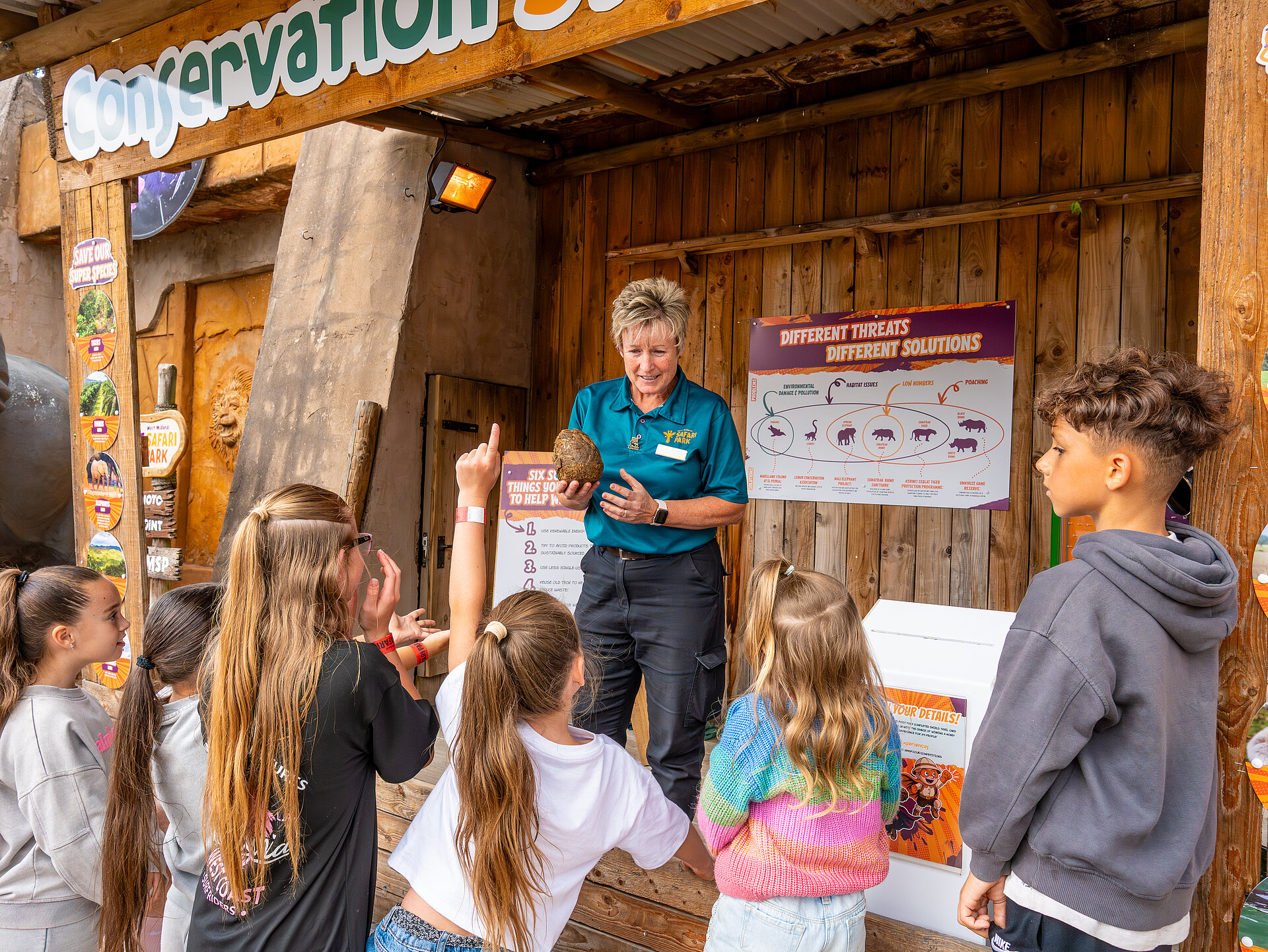
CONSERVATION
CONSERVATION
Conservation at WMSP
Wildlife parks in the 21st century have a duty to work for the conservation of biodiversity.
Here at the Safari Park, we take this very seriously and contribute to this cause in a number of ways.
Our conservation mission is: To support conservation of threatened species and habitats, locally, nationally and internationally.
Conservation Breeding (Ex-situ Conservation)
Many of the animals in zoos and wildlife parks are threatened with extinction in the wild.
These, and even some of those that are not yet classified as in trouble, are supported by well-managed conservation breeding programmes, known as EAZA Ex-Situ Programmes (EEPs).
For every EEP species, a ‘studbook’ keeper oversees deciding which animals should be paired with which mates based on their genealogy.
Animals are moved between wildlife parks to support the EEP for their species, ensuring the populations of the animals in human care are as genetically diverse as possible, therefore acting as important back-ups to the wild population of their species.
Find out about how zoos manage animal breeding programmes in the UK and Europe: click here.
Our long-term
conservation partners
Being there for conservation, right where the wild relatives of our animals call home, is incredibly important to us.
We have set up partnerships with five conservation NGOs, linked to some of our most iconic animals.
We support their on-the-ground activities in the areas where the wild relatives of our animals live, donating to them quarterly.

Global Penguin Society
Our partnership with Global Penguin Society helps fund on-the-ground conservation, research and education to protect penguins across the Southern Hemisphere.

Save The Rhino International
Our partnership with Save the Rhino International helps fund on-the-ground conservation, anti-poaching initiatives and community projects to protect threatened rhino species across Africa and Asia.

Mali Elephant Landscapes
Our partnership with the Mali Elephant Project helps fund on-the-ground conservation to protect Mali's unique desert elephants and their landscape.

Lemur Conservation Association (AEECL)
Our partnership with Lemur Conservation Association helps fund on-the-ground conservation, research and community initiatives to protect Madagascar’s endangered lemurs and their habitats.

Wild Cats Conservation Alliance
Our partnership with Wild Cats Conservation Alliance helps fund on-the-ground conservation projects to protect endangered wild cats and support the ecosystems they depend on.
Protecting Nature at Home
Habitat protection & restoration
Creating Habitats
We're creating areas filled with wildflowers, grasses, and native trees throughout our site.
This makes our entire park a welcoming place for British wildlife. Keep an eye out for our wildlife garden in the African Village area!
Backing Conservation Work
We support external organisations which work for the conservation of British wildlife.
In 2025, we became a Business Plus Member of the Bumblebee Conservation Trust.
This makes us an ally of the UK's 24 struggling bumblebee species.
Rare Habitats in our care
We're fortunate to have a portion of the Devil’s Spittleful Site of Special Scientific Interest (SSSI) on our land.
Some of it is hidden from view, while part of it is home to our dholes and Eld's deer! This area is one of the largest remaining heathland habitats in Worcestershire.
Over the past two centuries, Britain has lost up to 90% of its heathland. Traditional farming practices used to help maintain heathland, but changes in farming methods have led to monoculture farming or the transformation of heathlands into scrub and woodland.
We, along with other landowners of the Devil’s Spittleful, are actively working to clear scrub and remove invasive plants. We use methods like grazing animals to encourage the return of heathland plants, insects, reptiles, and birds. Through these efforts, we're creating a unique and diverse ecosystem that's rare to find.
Other conservation support
Other grants of conservation support
Read more in our Conservation Policy - Click here.

Red Panda Network

Giraffe Conservation Foundation donations

Grevy’s Zebra